We are recovering rapidly from the COVID disruptions. The economy is growing at a rate of 5-7% compared to the typical 2-3%. COVID cases and deaths are down 50-70% as we emerge from quarantine and begin to experience some ordinary social behavior. Things are certainly looking up, but during this COVID Recovery period, it’s critical that we continue taking advantage of opportunities to restore normalcy so that we can encourage personal prosperity and growth.
We are achieving major gains in areas like vaccinations, growing the economy, getting students back to school, and relaxing some guidelines. We’re also seeing an emphasis on social awareness as people continue working to end racial discrimination and minimize destruction in the Middle East. We’re feeling energized to make positive changes despite the fact that progress in areas like racism, gun control, infrastructure, and bipartisan efforts have been disappointing.
The most significant impact of the Pandemic is, perhaps, the acceleration of income inequality (which was already concerning prior to 2020). While most income tax rates have remained pretty consistent for decades, taxes for the top 1% have decreased from over 70% to under 30%. Thus, the country’s top earners have increased their wealth share from 60% to 80%. Inequality also extends to other areas like the K economy where the rich get richer and the poor get poorer. Companies like Alphabet, Amazon, Apple, Facebook, and other tech conglomerates are becoming more and more powerful in both social and economic programs.
There is a great deal of uncertainty regarding the work from home trend, but it will continue at a level of 20-30%, at least. The benefits (no commute time, reduced cost of office space) and improved technologies (Zoom) are too great to be ignored. However, we have not even seen the communication and interaction benefits that can be accomplished as more normal behavior resumes. Therefore, we need to manage, adapt, and develop effective solutions rather than try to execute personal or traditional preferences.
Furthermore, we need more innovation as part of the COVID Recovery. I believe efforts like Artificial Intelligence, electric cars, improved technology in education and business, better health care, solutions to prevent climate change, etc. can contribute to the acceleration of our economy. For example, Biden visited a Ford plant recently to introduce a new truck. It generated more excitement, interest, and publicity than many other efforts. Consider how gains in areas like this are a win-win with few losers or dissent.
Another trend we’re seeing is increased stress levels as a result of more shootings, crime, discrimination, and suicides. Even the Supreme Court is experiencing more stress related contentiousness. To make matters worse, for the last year, physical acts that once provided comfort and encouragement (hugs, high-fives, handshakes) were discouraged. As social creatures that crave human connection, it takes a toll on us mentally when we’re unable to find solace in a hug or vent at the water cooler with friends. On the plus side, however, we’re seeing these gestures being reincorporated into our routines as part of the COVID Recovery.
A positive trend that started during the pandemic (and seems to be sticking around) is an increased focus on mental health. Many people started talking with a therapist as quarantine took its toll. And many health insurance companies encouraged this by offering free counseling services. Hopefully, we continue to proactively manage stress and take time to practice mindfulness because pretending problems don’t exist, overextending ourselves, and being too stubborn to ask for help are all surefire ways to make stress worse. You may be able to keep it bottled up for some time, but it will eventually find a way to rear its head.
The pandemic affected women in a variety of ways. Poor women, in particular, were more likely to experience adverse effects—they suffered more unemployment and were left with more responsibilities (like childcare and homeschooling) than men. These issues also caused an increase in stress, depression, and self-image. COVID Recovery plans need to include more programs and support for women. We must work to empower women, eliminate workplace harassment, improve their healthcare options and the control they have over their own bodies, demand equal pay, and provide equal opportunities.
Another noteworthy area is the Real Estate market, which will remain uncertain for a significant period. This will create some issues, but also provide many opportunities. Restaurant and store closures are causing a massive structural change in retail space. For example, it is estimated that 100,000 to 200,000 (mostly small) restaurants have closed. This will favor larger restaurants by providing greater opportunities for big and more successful restaurants. Residential movement from the city to suburbs is also becoming significant. The return to offices will be slow and probably less than 70-90%. All of these trends are creating huge opportunities for office space design, communication, and recreation.
Travel and entertainment are recovering, but very slowly. While personal travel may resume quickly, business travel and meetings will probably be reduced permanently. Opportunities in these industries will need to support these trends and focus on ways to embrace the slow transition.
Most importantly, no matter where you are in the midst of the COVID Recovery, don’t forget to take care of yourself. Eat healthy meals, exercise, get some fresh air, meditate, try to keep a regular sleep schedule, and be patient (with yourself and others). We’re all going through a lot—cut yourself some slack.
Finally, whenever you identify an opportunity and decide to capitalize on it, make sure to develop and execute solutions. Take comfort in the fact that risk can be reduced greatly with a better understanding of COVID Recovery trends. The Pandemic may have hit us hard, but it won’t keep us down. Keep your head up and stay focused on the possibilities.
Dr. Bert Shlensky, President of StartupConnection.net, has an MBA and PhD from the Sloan School of Management at M.I.T. He served as the President of WestPoint Pepperell’s apparel fabrics business & President and CEO of Sure Fit Products. More than 2,000 clients have benefitted from his business acumen over the course of his long career. He now focuses on working with select startups and small businesses. For more information, please visit our website: https://www.startupconnection.net/
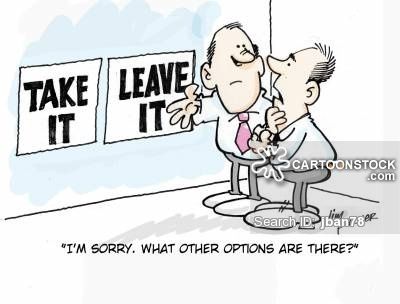
All of our decisions, both personal and business related, are influenced by issues of support versus tough love. When it comes to small business, I prefer an approach that ensures adequate understanding and support in order to help someone develop the confidence and skills required to make sound decisions. This approach can also facilitate tough love strategies (when needed) that require analysis, reality, and challenge. Choosing the timing and nature of the combination can be made effective.
Training, mentoring, teamwork, and confidence are critical for effective decision-making. Nevertheless, tough love in the form of technical information, probability, and risk are necessary to validate the decision process. In other words, you must develop methods of support to realistically assess the tough love components of decision-making.
Here are some suggestions to achieve that balance:
Start with understanding the culture and participants. For example, I tend to be left brain and more technical. Others are more right brain and supportive. You need both. Yet, many people are too proud and reject help. It’s easy to be so convinced of what you’re saying that you end up ignoring how your listeners will receive your words. For example, if you take into account who your audience is, you can cater how you present your information in order to be more effective. This is especially important when dealing with technical information and strong opinions.
Age, status, education, and reputation of the listener and communicator can all dramatically affect perceptions. We frequently underestimate the importance of the perceptions of analytical information in communicating arguments among different groups. For example, our treatment of minority groups like Asians and Native Americans is frequently not considered. If you don’t understand where your audience is coming from, you’re probably not going to be able to help them or communicate effectively with them.
Improve Decision Making. We like simple and easy solutions. People with great intentions can sometimes lack understanding. Simple, clear, and actionable efforts can resolve this. A simple suggestion: annual analysis is much simpler to understand and analyze unless you need the monthly changes.
Communication also needs a “WIN-WIN” mindset instead of a competitive environment. We know positive feedback is received more favorably and, yet, how often do we see (or even participate in) criticism, blame, and one-upping when we find ourselves in pressure situations? Can you find ways to compromise and look for solutions that benefit all instead of just one? For example, following the 80-20 rule and focusing on the best opportunities is one of the most productive efforts to be supportive and address tough love issues.
Tom Peters’ book, Management by Walking Around, is the best management tool for mitigating the support versus tough love dilemma. It encourages a relaxed atmosphere where one can understand the context of an issue or the background of an individual. A corollary of that tool is maintaining informality, which is important in the pandemic environment. Informal meetings with customers and colleagues as well as informal lunches or social events can be highly beneficial. One of the simplest and best tools to develop support is to simply say please, thank you, and ask, “How are you?”
Environmental issues can be the most ignored factor in creating a culture. Hierarchical structures, formal office settings, and even dress code can affect problem solving. We need to understand and adjust to new rules of communication and collaboration. The pandemic has forced us to adapt in a plethora of ways: work from home, social gatherings, video meetings, etc. And there will continue to be change as the “new normal” becomes more defined. It’s important to keep working to understand the environment and how it affects you and your employees, coworkers, and customers. Furthermore, what type of environment can you create to support your small business?
Organizations and individuals with more open communication are more effective. Practices like “need to know” are simply obsolete. The more people know, the more effective they can be in their work. When everyone is on the same page, more gets done efficiently.
We cannot ignore facts, analysis, and challenges when making decisions. It’s critical to remember that they’re most effective when used to support, improve, and understand decisions rather than simply challenge them. Tools like exploring alternatives, listening to experts, writing things down, and informal communication can frequently improve the process. We also need to consider the accuracy and validity of the information, the risk involved in various decisions, and personal preferences. Like so much in life, it’s about finding the right balance and it won’t be the same for everyone. So, take some time to consider: Where can I afford to be more supportive and where do I need to administer some tough love?
Dr. Bert Shlensky, President of StartupConnection.net, has an MBA and PhD from the Sloan School of Management at M.I.T. He served as the President of WestPoint Pepperell’s apparel fabrics business & President and CEO of Sure Fit Products. More than 2,000 clients have benefitted from his business acumen over the course of his long career. He now focuses on working with select startups and small businesses. Please visit our website: StartupConnection.net for more information.
“Money makes the world go round,” as the saying goes… And, undoubtedly, we’ve all spent time worrying about our personal finances. Yet, how much time do we actually spend trying to learn ways to improve our financial situations? Too often, we fret about things, but fail to fully understand the bigger picture or take action to better the circumstances. So, let’s discuss some ways to jumpstart financial success.
First, look at your personal finances and consider options. This can be overwhelming for some because the expansion and complexity of financial issues has made understanding them more uncertain. Additionally, many financial advisors focus on helping people do specific things (i.e. reduce risk, provide income, plan for retirement, save money, etc.). They frequently focus less on growth, reasonable risk, and family issues. Therefore, they fail to understand your entire situation.
Consider this example: low inflation and interest rates have caused bond returns to be (2-4%) dramatically less than stocks (10-20%). Similarly, small businesses are getting more access to business loans at lower rates. Yet, many advisors continue to recommended high rates of investment in bonds, which basically dilutes an investor’s potential over time. If you have 10-20% returns in stocks for a few years, you are still better off in a declining period than earning almost nothing by investing in bonds or a savings account.
Also noteworthy: having a safety net might encourage people (especially young people) to spend rather than save. This is especially true if parents can provide a backup (either monetarily or in the form of housing) when they’re getting started.
One of the first steps in financial management is to understand the parameters especially as options and opportunities become more complex. For example, research the risk of investments and understand options like buying on margin, bitcoin, shorting stocks, Game Stop stock, etc. before making any decisions.
I am always reminded of a strategy meeting held several years ago. We were discussing using a venture capital firm and the presentation included several references to EBITA. One of our design staff spoke up and asked, “What is EBITA? It sounds like an animal.” After receiving an explanation, she suggested that outsourcing and importing could lower expenses and increase EBITA. The lesson is to always ensure we understand and explore all the elements of personal finance.
So, what now?
Gather all of your information and write it down. I recommend simple rather than elaborate analysis and be sure that you are involved in the process. Elaborate analysis can have wrong assumptions, can be too complicated to understand, and is often abandoned because it is too complicated and may utilize tools that aren’t appropriate.
There are a few basic elements of your information that should be reviewed, at least, annually:
A balance sheet that includes all of your assets and liabilities. This would include securities, personal assets, debt, and long-term liabilities like mortgages. In short, how much are you worth including an estimate of things like pension and social security benefits? Keep it simple and, if needed, analyze select issues in more detail.
An income statement and plan. How much are you earning and how much of that will you keep? This mostly includes the basic information from your tax return. Where does that income go in terms of expenses, debt payments, savings, etc.?
How much debt do you have and what are the costs? Is it short or long-term and how is it changing?
Asset based loans (mortgage, car, line of credit) are much less expensive than credit card loans, payment terms, or other loans with 10-20% interest rates. For example, if you have several thousand dollars in stocks, a line of credit can be particularly attractive.
While assessing your situation, consider the values of assets like house ownership, life insurance, retirement benefits, and family assets. Consider gifts, inheritance, end of life expenses, and in-kind contributions like family vacations as part of your financial assessment. Generally, we are living longer and might want to consider giving gifts to young people before they are too old to really use it.
Identify and compare alternatives. Investing, saving, spending, types of investment, and time periods are all things that should be considered. Additionally, while evaluating your options, you need to consider the environment, personal preferences, and financial situation. I believe in, at least, reviewing alternatives even if you end up deciding against them. But, economic reforms and the decline of the pandemic should generate a strong economy in 2021.
Consider new alternatives rather than outdated standard tools. Tech platforms, Fin-tech, direct sales, the Internet etc. are driving the economy—not traditional manufacturing companies. Growth is more likely than recession and strategies like traditional companies and cash investments may be overrated.
Assess your personal situation in terms of job, monetary requirements, future expenses/needs etc. In particular, what are your passions, strengths, and constraints? I always come back to Sheryl Sandberg’s recommendation to consider, “What would you do if you weren’t afraid?”
The most important advice regarding personal finances is to just pay a little bit of attention. Consider opportunities and alternatives as well as challenges and constraints. That mindset should be supplemented by a continuous process of analyzing, measuring, and adapting to ever-changing parameters, programs, markets, and risks. Anytime we deal with money, there is potential for stress. But, we shouldn’t view personal finances as a daunting subject. Instead, look at it as an opportunity to learn, grow, improve your circumstances, and set yourself up for greater success.
Please visit our website www.startupconection.net to book a Free Session in which we can help you develop an action plan that will evaluate potential and risk. We always discuss process, expected outcomes, and cost before you make any commitment.
Dr. Bert Shlensky, president of Startup Connection\, prides himself on his ability to define what is unique about each and every business. He works closely with individuals to develop a personalized approach that targets specific areas of concern and offers solutions based on his 40+ years of experience. His expert team will address your particular needs while working to save you time and money.
Let’s face it: Bureaucracy has lost much of its effectiveness. The entire system needs a dramatic overhaul. Many aspects of bureaucracy actually cause reduced organizational effectiveness. Hierarchy, which implies power based on position, limits the impact of new research and expertise in decision-making. Even Max Weber, one of the original advocates of bureaucracy, understood that it could be threatened when focusing on “the rules” overshadows the actual goals. This happens constantly, which means the system is broken. When things aren’t getting accomplished because we’re stuck following ineffective procedures, it’s time to change the process. We’ve all experienced this. How many times have you found yourself unable to complete (what should be) a simple task because of a flawed system? Ever find yourself passed around from person to person and no one seems to have an answer for you?
We find this model works better for us!
Bureaucracy also lacks the vision and flexibility to deal with innovation and the increased pace of change in our environments. In short, bureaucracy, rather than performance, becomes the goal. My worst nightmare regarding bureaucracy is the phrase, “We’ve always done it that way.” It’s a refusal to consider alternatives and, thus, a recipe for failure.
Even more perplexing is the fact that we continue to ignore some proven models of success. Open systems and collaboration, in my opinion, are like winning the trifecta at the horse track. They have been around for a long time, but are just now becoming the norm for success. They reject bureaucracy, authority, hierarchy, and closed decision-making processes. They encourage participation, diversity, new rules, and to some extent, chaos.
It should come as no surprise that open systems are superior and continuing to do things “the way we’ve always done it” is a dead-end. But, society as well as businesses fail to recognize that old paradigms and structures are failing:
Large corporate structures (print publications, big banks, and brick and mortar retailers) are all gradual losers, or even worse. Even Jamie Dimon of Chase recognizes that banks have allowed Fin-Tech startups to threaten their future growth.
Companies and society continue to do what they have done in the past, often with poor results. Despite massive economic and political efforts, issues like income inequality, healthcare, and infrastructure investment will continue to hold our economy back.
How do you move away from bureaucracy and toward open communication?
Innovation and Discipline
Innovation and discipline can coexist. It requires improving autonomy at all levels as you simultaneously increase discipline. For example, Google, among other big corporations, are developing artificial intelligence (AI) programs to write and develop artistic works like music and art. They argue that this technology will greatly enhance an artist’s ability to create. Others disagree, saying that it will just replace artists.
My own experience in the knitting industry showed me that automation greatly enhances an artist’s potential and reduces mundane tasks. (At one time, mechanics had to spend hours making chain links to design a new sweater.) I believe that similar improvements are evident in areas like digital photography and inventory management.
Focus and Diversification
Some businesses try to randomly pursue diverse options by simply throwing s**t at the wall and seeing what sticks. Others complete so much research and planning that, in the process, aspects like goals, probabilities, and outcomes are overshadowed or forgotten. Business owners need to identify priorities and focus. From there, test and adopt or change as opportunities or issues arise. It’s important to remember that many plans are based on wrong assumptions or are poorly executed and, therefore, do not succeed or are unable to adjust to change.
For example, I was working with a client who was trying to execute over 15 different educational programs and was stressed out, over budget, and not managing effectively. We simply cut out the least effective programs, which saved money and, as a result, were able to allot additional attention and resources to the more effective ones. Focusing your strategy can be accomplished with a few simple efforts:
Measure, Estimate, Prioritize, and Adapt.
Follow the 80-20 rule.
Make mistakes and learn from them.
Be open to change and feedback.
Experience and Expertise
In his book “Outliers,” Malcolm Gladwell became famous for stating that, “10,000 hours of practice are required to become a world-class expert.” I am not sure it is 10,000 hours, but my experience indicates that experience and expertise are probably the most important factors in achieving success. That doesn’t mean you need expertise in everything, but it does mean you need at least a hook in the field you are pursuing. And if you know you are lacking expertise in a critical area, I suggest hiring someone to help.
For example, right-brain creatives typically don’t like financial analysis so it’s usually a good idea for them to hire an accountant. In the last couple of weeks, I have had clients with seemingly great ideas and passion who overestimated their gross margins by 10-20%. They simply didn’t do the detailed financial work and didn’t understand that those numbers could make a huge difference between profit and loss.
This argument is not intended to ignore the importance of passion, commitment, innovation, testing, and even mistake making. I’m just saying that both individuals and organizations need to realistically assess the risk of failure and the reward of success. Expertise and experience are critical for accurately evaluating opportunities and new innovations.
Risk and Evaluation
Are all of the aspects of a decision understood? Do you know the probability of reward, the amount of the reward, and the value of the reward? For example, what are the goals of your efforts? My clients are usually small businesses who need to make a profit and earn a living. Thus, they frequently pursue less risk.
In contrast, venture capital firms are frequently pursuing growth and worry whether the enterprise will be large enough to generate large returns. Therefore, they expect a certain amount of loss as well as some lost investments in order to generate large growth and profits in other areas. Where does your business stand? And how much can you afford to risk?
Analytics and Intuition
The increased use of analytics over intuition has been significant in improving the understanding and results of decision-making. While there are no quick and simple resolutions, there are a few simple rules to improve the decision process using both analytics and intuition.
‘Outcomes…normally we just measure the height of the files.’
Analytics is simply the increased use of research, models, probability, risk, numbers, and analysis to improve decision-making. In some cases, it has proved to be a valuable tool to understand and improve decisions or simply validate prior intuition—particularly where there is plenty of stability and historical data. For example, I have helped several of my clients improve their businesses by focusing on the 20 percent of customers or products, which we know, statistically, accounts for 80 percent of their sales.
Forget Fear.
Few sports teams, sales calls, or competitions achieve more than a 50 percent success rate. Rather than dwell on and sulk over losses, analyze your mistakes and research how to improve. Additionally, cultivate a business culture that values feedback, encourages communication, and supports collaboration. Open and honest communication on all levels is the only way to move past mistakes in a productive manner.
Empower Employees.
Giving your staff and management teams the freedom to make decisions and take (reasonable) risks can result in improved productivity. When you hire and train talented and trustworthy people, you can rest assured that they will do their jobs to the best of their ability and, ideally, add value to your business. When employees feel trusted and are given the autonomy to take chances, they’re more likely to think outside the box and offer alternative solutions. This authority in decision-making also means that employees will make mistakes at times and it’s important to remember, once again, that without failure, there is no success.
Look Beyond Your Circle.
It’s imperative to have external resources for obtaining information and receiving feedback. You need people who will tell you the truth without sugarcoating it. Make sure you have a reliable network that understands your business needs.
In general, I recommend more consideration of the process of decision-making. How good is our information, what are the consequences of mistakes and how much risk can we afford? I believe with the exception of issues like safety we can afford more risk and openness. We generally are overly concerned with the consequences of mistakes rather than the potential of risk.
And finally, let go of bureaucracy. Yes, it can be scary to transition to something new, but familiarity doesn’t equal success. In fact, sticking with something just because it’s comfortable usually isn’t beneficial. And, shockingly enough, sticking with something that doesn’t work (i.e. bureaucracy) also doesn’t work. It’s broken and it’s not worth fixing. It’s time to replace it.
Dr. Bert Shlensky is the president of www.startupconnection.net. He and his team of experts focus on helping businesses develop integrated customer-focused marketing programs that are key to business startup success. Dr. Shlensky’s most recent book is entitled, “Passion and Reality and Small Business Success.” You can reach Dr. Shlensky at: 914-632-6977 or email him at: bshlensky@startupconnection.net
The word “uncertain” doesn’t usually give us much hope. It implies instability, insecurity, and vulnerability—all things most of us try to avoid. But, perhaps, we can find a way to embrace uncertainty and find a way to make it work in our favor.
As we forge ahead into 2021, there will certainly be a significant amount uncertainty. Generally, we try to predict future trends based on recent past events. However, 2020 had such immense disruption that it is almost useless to use it as a base. Many argue that this uncertainty causes pessimism and lowers expectations. However, I argue we need to embrace uncertainty, as it creates opportunities and should incite positive expectations.
Why? Well, let’s take a look at the following paragraph describing American economic trends: “Despite this prosperity, major shifts were occurring in American business and the workforce. Preexisting corporations were merging and becoming larger, more powerful conglomerates. Consumers increasingly were doing their shopping at discount chain stores and their dining at inexpensive fast-food restaurants, leading to a decrease in the number of single-proprietor businesses. Meanwhile, manufacturers were relocating from the Northeast and Midwest to nonunion Southern states, taking jobs with them and robbing industrial cities of their vitality. Manufacturers also were opening factories in foreign countries to take further advantage of cheap labor. These shifts led to a decline in the power of unions.” (The 1960s Business and the Economy: Overview | Encyclopedia.com)
While this could describe much of today’s economy, it’s actually a description of the 1960s. It shows progress after disruption and it’s arguable that the 1960s had even more disruption than we have currently (consider the assassinations, civil rights, wars, and general social change). After major turmoil, we still achieved more growth, technological improvements, and social change than we’ve seen today. I believe that the stress we’re currently experiencing as a country could produce the same excitement that we saw in the 60s. On the other hand, it may be difficult to replicate Kennedy, the Beatles, a moon launch, the computer explosion, Martin Luther King Jr., and some of the other revolutionary changes that took place during that decade. But, history repeats itself…
And, historically, change usually occurs after disruption (and we have most definitely experienced a lot of that). In my own experience with corporate turnarounds, it’s much easier to motivate, innovate, and develop collaboration in troubled or changing organizations than within those whose culture is based on the closed-minded rule of “we’ve always done it this way.” It’s amazing how many individuals and organizations have incorporated new efforts like E-commerce, work-from-home, Zoom, etc. in order to adapt to the times and, as a result, have actually improved their results.
While we tend to focus on the negatives, there are many circumstances that should create a more positive environment if we learn to embrace uncertainty. The most significant may be the coronavirus. I suggest we focus our planning on the potential of the vaccine by spring or summer more than the tragic experiences of today. In other words, rather than just worrying about the possibility of shutting down in the near future, we should be adopting a mindset of: How do we keep a business viable today in order to thrive in the fall? How do we learn to embrace uncertainty?
I recommend focusing on these three areas that create significant opportunities for positive thinking: technology, expectations, and analytics.
While we seem to constantly advocate for technology, I think we underestimate it. For example, financial advisors continue to advocate balanced portfolios with traditional companies and bonds, but here’s the reality:
In 2016, if you had invested $10,000 in each of P&G, G.E., G.M, and Exxon (all among the leading companies of the day), it would be worth $35,000 or a loss of about $5000. If you had invested the same amount in Amazon, Google, Facebook and Microsoft, it would be worth $169,000 or a gain of about $139,000. If you had invested the $40,000 in 3% bonds, it would be worth about $46,000 or a gain of about $6,000. Yet, advisors tout Exxon as a great opportunity for 2021 despite the growth in electric cars, energy saving efforts, and reduced energy consumption.
Pay attention to areas like E-commerce, A.I., infrastructure, medical research, etc. These will produce dramatic opportunities for growth and investment.
Positive Expectations are a critical cause of growth and success. Venture capital, increased risk, and positive thinking can produce dramatic results. Low interest rates and inflation have had a huge impact on reducing actual risk. My favorite musical has always been My Fair Lady because of the Pygmalion effect, which infers that having positive expectations leads to enhanced performance, which results in a higher probability of success. The implication is that confidence and energy will increase if we believe in ourselves. On the other hand, a negative self-perception results in a significantly lower chance of succeeding. What we think we’re capable of, therefore, basically becomes a self-fulfilling prophecy.
Technology and expectations can be enhanced with improved measurement and analysis. Some simple ways to implement analytics: review goals, probability, risk, and measurement. Basically, ask yourself how you’re doing and where you can improve.
More advanced analysis, testing, and measurement may include creating more dynamic and interactive efforts, which can boost the development of strategies. Allowing for failure and considering alternatives can also be useful. Incorporating operations, customer service, branding, and pricing in decision making can create new, successful approaches. Accept this fact now: Mistakes will occur. So what? Learn from them and move on. Mistakes are only bad if you keep making the same ones.
So, you see, positive expectations can have a dramatic impact on success. Yes, there is uncertainty ahead, but when has there ever been zero uncertainty? A feeling of security at any given moment doesn’t actually equate to certainty. We can’t predict the future and we don’t know what tomorrow holds. There will always be uncertainty, so embrace uncertainty and trust that the “unknown” is where possibility lives. Facing unexpected change is the fastest way to determine if you’re a pessimist or an optimist. What will you be? A defeatist or an opportunist? Why not try expecting greatness? Expect it from yourself, from others, and from the universe. Because when you expect it, it’s easier to find.
Please visit our website www.startupconection.net to book a Free Session in which we can help you develop an action plan that will evaluate potential and risk. We always discuss process, expected outcomes, and cost before you make any commitment.
Dr. Bert Shlensky, president of Startup Connection, prides himself on his ability to define what is unique about each and every business. He works closely with individuals to develop a personalized approach that targets specific areas of concern and offers solutions based on his 40+ years of experience. His expert team will address your particular needs while working to save you time and money.
“The 1960s Business And The Economy: Overview.” Encyclopedia.com, www.encyclopedia.com/social-sciences/culture-magazines/1960s-business-and-economy-overview.
When you want to stand out, reach out to Bert for the tools that will build your “sticky” brand. My focus is on understanding and analyzing your dilemmas and challenges, so your company becomes profitable faster.
Call (914) 632-6977 or email me at bshlensky@startupconnection.net. Don’t leave without signing up for our useful free eBook!
Feeling stumped or overwhelmed? Contact Bert at (914) 632-6977 or Email to start the process. Thanks!




![[while reading "Economic News" at a news stand]
"I'm not as interested in the strength of the economy as in whether it's on my side."](https://i0.wp.com/startupconnection.net/wp-content/uploads/Im-not-as-interested-in-the-strength-of-the-economy.jpg?resize=725%2C236&ssl=1)

